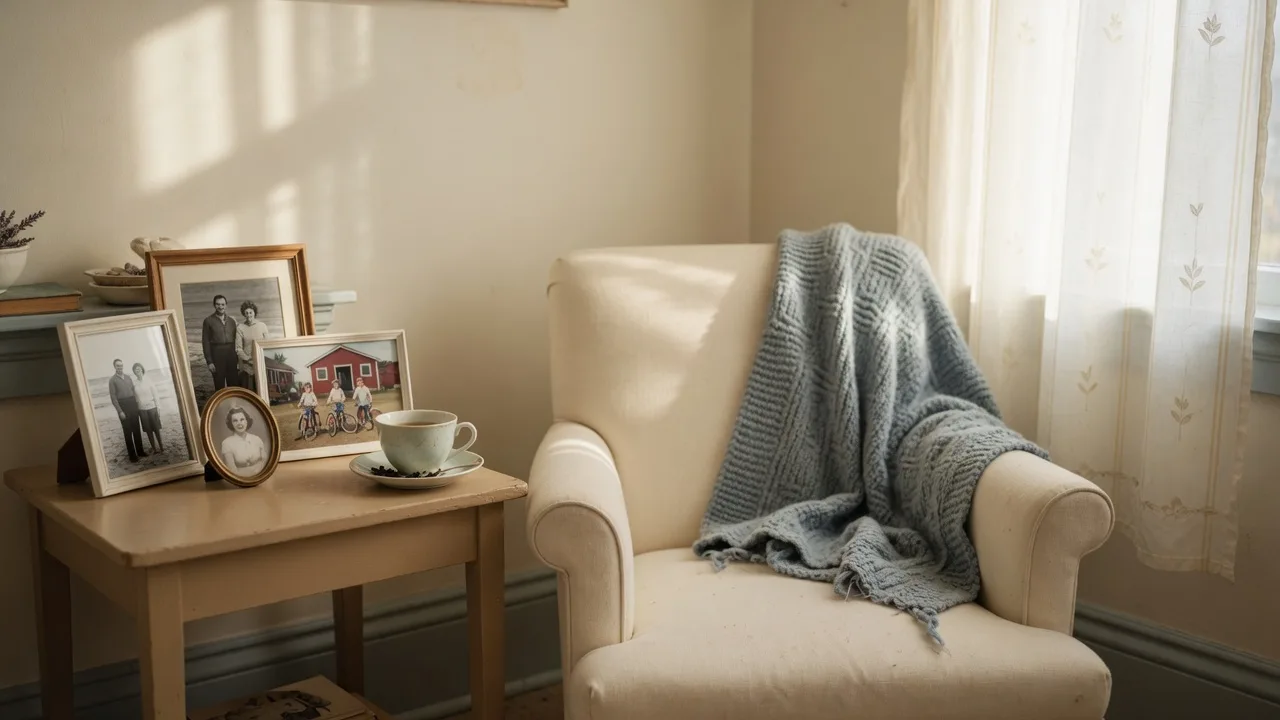
I've guided hundreds of people through downsizing over more than 25 years in real estate. The part that surprises most of them is not the logistics; it is how much they feel. Downsizing touches on identity, memory, independence, and the deep attachment we form with the places that have shaped our lives. If you are going through it or thinking about it, know that those feelings are not a sign you are making the wrong decision. They are a sign you are paying attention.
Why does downsizing feel so hard?
A home holds more than furniture. It holds the routines of decades: morning coffee in the same chair, holiday dinners around a particular table, children's growth marks on a door frame. Leaving that behind can trigger a kind of grief, even when the decision is entirely voluntary. Psychologists often compare it to any significant life transition, like retirement or an empty nest. There is a real sense of loss, and that loss deserves to be acknowledged rather than dismissed.
For many of the clients I work with, the difficulty is not about the house itself. It is about what the house represents: a chapter of life that felt full and meaningful. Recognising that distinction makes it easier to move forward with care instead of guilt.
How do you work through the emotional side?
Give yourself time
The biggest mistake I see is rushing the process. Downsizing involves hundreds of small decisions, each one carrying some emotional weight. Start months before you plan to move. Work through one room at a time, and allow yourself to pause when a particular item or space brings up strong feelings. There is no prize for doing it quickly.
Honour what matters
You do not need to keep everything, and you do not need to throw everything away. Choose the items that genuinely carry meaning for you, and let the rest go with gratitude. A favourite recipe book, a child's drawing, a piece of furniture that still serves you; these things can travel with you into the next chapter. What you are really doing is curating a life that reflects who you are now.
Involve the people who matter
Downsizing can feel isolating, especially if you are doing it after a major life change such as retirement, a separation, or the loss of a partner. Bring family members into the conversation early. Ask them to help sort through shared memories. Their involvement can turn a difficult process into a meaningful one, and it helps ensure that important items find the right home.
Focus on what you are gaining
The emotional weight of downsizing often centres on what you are leaving behind. Shifting your focus toward what comes next can be genuinely restorative: less maintenance, more freedom, a home that fits your current life rather than your past one. On Prince Edward Island, that often means more time for the things that matter most, whether that is walking the coastal trail, spending mornings at the farmers' market, or simply enjoying a richer, more connected way of living.
What does the research tell us?
Studies on life transitions consistently show that people who feel supported, informed, and in control of their decisions adjust more quickly and more positively to major changes. Downsizing is no exception. When you approach it as a deliberate choice rather than something that happened to you, the emotional burden lightens considerably. This is one reason I encourage clients to begin the conversation long before they are ready to move; it transforms uncertainty into preparation.
A note from experience
After more than 25 years in real estate, including my own move back to PEI from Toronto, I have learned that the hardest part of any transition is usually the decision itself. Once the decision is made and the process begins, people are often surprised by how quickly the anxiety gives way to relief. There is something genuinely freeing about living in a space that suits the person you are today.
Downsizing on Prince Edward Island offers a particular kind of peace. The homes are here, the communities are welcoming, and the pace of life allows you to settle in without pressure. If you are weighing that decision, I am happy to talk through both the practical and the personal side of it.
"From our very first conversation, Cheryl made us feel at ease. She listened carefully, answered every question honestly, and never made us feel pressured. We always felt like she was looking out for our best interests." Cheryl's clients